
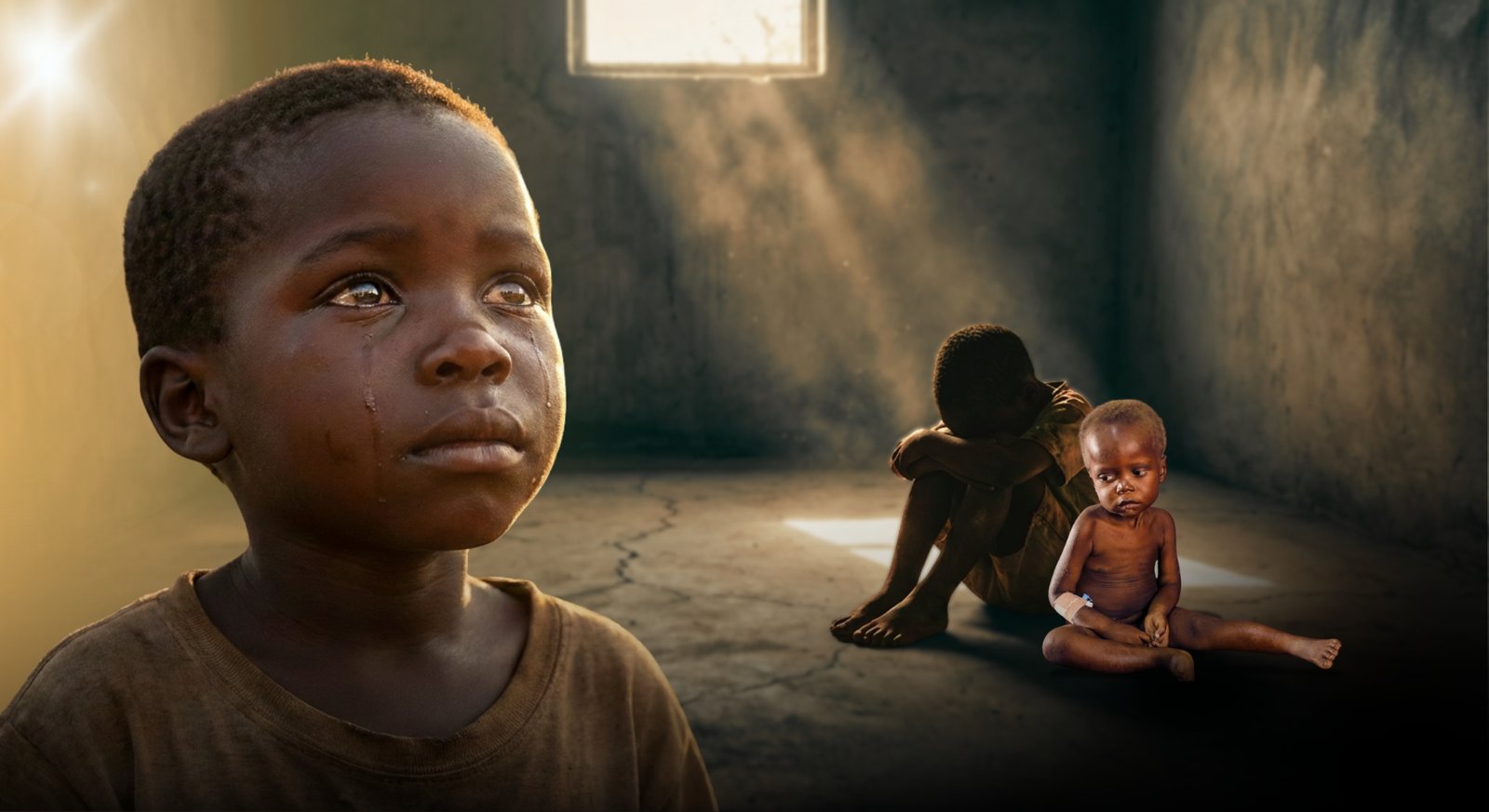
The Myth of Survival as Love
For generations, the definition of care has often been limited to the physical. In dusty courtyards where tiny feet ran searching for warmth, many children learned that “survival was love.” Food was affection. Shelter was care. But laughter had limits, and tears were offenses [01:04].
We created a culture where silence became the only safe language. Under the blazing sun, discipline became a rigid tradition where strength was equated with silence. “Stop crying,” “Are you weak?”—these were the questions that taught children to bury their pain so deep it became their identity [01:45].
Watch the full visual essay here: The Wound We Don’t Talk About: Healing the “Unloved African Child”
The Cost of the Invisible Wound
The impact of this emotional silence is devastating. Children who are never held with tenderness grow into adults who chase love in places that break them further [02:04]. We see the ripple effects in our society today:
- Homes as Battlegrounds: Parents fighting life so fiercely they forgot softness, their voices becoming louder than their love.
- Trauma as Inheritance: Fear became a family heirloom, handed down like tradition [02:47].
- The Cycle of Disconnect: Many of us now “love like we were taught”—with walls instead of arms, and silence instead of comfort [04:15].
The Power of a “Loved Child”
Imagine an Africa where every child hears “I see you,” “You matter,” “You are enough.” A loved child stands differently. They take up space without apology and walk into their destiny as if it belongs to them [01:24].
When we replace fear with connection, we unlock potential. A loved child imagines widely and creates futures we haven’t yet dreamed of. As the video reminds us, “When children rise, nations rise” [03:50].
Breaking the Cycle: A Call to Action
The miracle is that the cycle can end here. We are the generation that can rewrite the future.
- Choose Connection: Every time you choose a hug instead of fear, a new story begins [05:02].
- Choose Patience: Every time you choose patience over anger, a new legacy is formed.
- Give Them a Voice: Provide the gift we needed most—a safe place to feel and a voice that matters [05:27].
Conclusion
If the African child had been loved in the past, Africa might be different today. But if the African child is loved today, Africa will be transformed. Let us look into the eyes of the next generation and give them the tenderness that allows a heart to bloom.